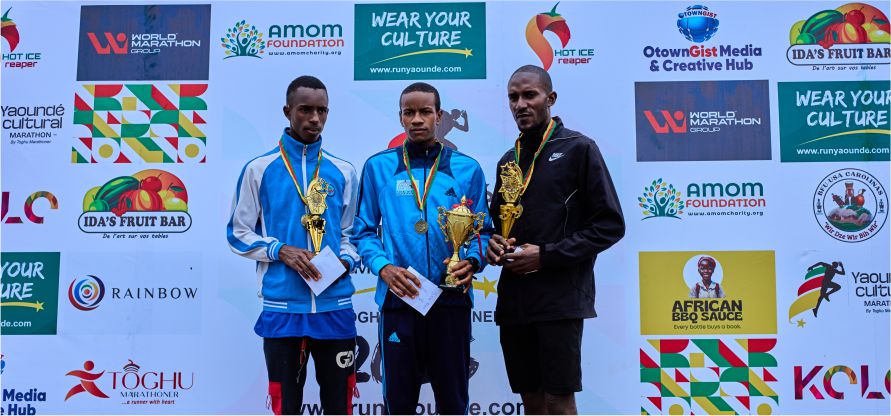
Participants in the maiden edition of the Yaoundé Cultural Marathon can now access photographs of their performances through a new digital service introduced by the event organisers.
Runners who participated in the 2026 Yaoundé Cultural Marathon now have another opportunity to revisit the historic sporting event following the release of race photographs through the marathon’s official website.
The photographs, which capture different stages of the inaugural competition held on July 18, 2026, in Cameroon’s capital, are being made accessible through individual athlete profiles, marking another development in the organisers’ efforts to improve post-race services.
Unlike the conventional practice of publishing hundreds of event photographs in a general gallery, the system allows participants to search for their names or race bib numbers and access images associated with their profiles. The feature is available through the event’s online results platform at www.runyaounde.com/results/.
The photo release comes after the introduction of an online results and digital certificate service, giving participants access to their recorded finishing times, race positions and finisher certificates without having to contact the organisers individually.
The inaugural marathon, which started and finished at the National Museum in Yaoundé, brought together competitive runners, recreational athletes, children and cultural enthusiasts for an event designed to showcase Cameroon’s heritage through sport.
Reacting to the development, the event’s Brand Manager, Chinedu Hardy Nwadike, said the organisers were increasingly interested in how technology could improve participants’ interaction with the marathon, particularly after the competition itself.
“People participate in marathons for different reasons. Some want to compete, some want to achieve personal goals, while others simply want to be part of something memorable. Whatever brings them to the starting line, they deserve to have something they can look back on. Making race photographs accessible through personal profiles is one way of giving participants ownership of those memories,” he said.
Nwadike explained that the technology-driven improvements were part of lessons gained from organising the first edition of what the organisers describe as Africa’s first cultural marathon.
According to him, the event was never intended to be another road race, but a platform capable of promoting African cultural identity while meeting the expectations associated with modern international sporting events.
“We came into 2026 with an idea that needed to be tested. The first edition gave us the opportunity to understand what works, what needs improvement and what participants expect from us. We have moved beyond that initial stage, and our attention is now on developing a more complete experience for 2027,” Nwadike stated.
He noted that the introduction of digital race records, personalised photo access and online certificates demonstrated the organisers’ determination to invest in systems that could support the event’s growth.
“There is no reason an African cultural event cannot offer the same level of organisation, innovation and convenience people experience elsewhere. Cameroon has a rich cultural identity, and we are building a sporting platform that presents that identity to the world. Our responsibility is to ensure that the experience matches the ambition,” he added.
The release of the photographs is also expected to give participants a better opportunity to share their experiences with friends and family, while providing a lasting visual record of an event that combined athletics with cultural celebration.
The marathon was conceived by Guinness World Record holder and Toghu Marathoner Afowiri Kizito Fondzenyuy, whose vision is to use distance running as a means of promoting African culture, tourism, community participation and social inclusion.
With preparations already underway for the second edition scheduled for July 3, 2027, the organisers are seeking to build on the lessons of the inaugural race by improving registration processes, participant communication, race-day coordination and digital services.
For runners interested in retrieving their photographs, the process begins with visiting the official YCM results portal, searching for their names or bib numbers and opening their individual athlete profiles. Photographs that have been successfully matched to their records can then be viewed through the available gallery links.
Not every participant is guaranteed to have photographs attached to their profile, as availability depends on the images captured and identified during the event.
The organisers say the ongoing improvements are intended to make the Yaoundé Cultural Marathon more than an annual sporting competition, positioning it as a cultural experience that participants can continue to engage with long after the race has ended.
Leave a Reply